
Some campsites have power. Many of the best ones… don’t.
And that’s usually the moment you realize your phone battery drops faster in the wild than anywhere else on Earth.
So let’s talk about camping with power without turning your trip into a mobile science project or lugging around equipment that belongs on a construction site.
This guide keeps things simple, practical, and very doable. No overkill. No tech talk unless it’s genuinely helpful. Just what you actually need out there.
Why Power Matters More Than You Think
Everyone claims they’re going “off-grid.”
But then nighttime hits, someone wants to take a photo, someone else wants a fan, and suddenly you’ve got four people leaning over one tiny power bank like it’s the last match on the planet.
Good power doesn’t make your trip less “authentic.”
It just prevents the kind of chaos that ruins good camping trips.
Let’s break down the real options.
1. The Simple Stuff: Light + Phone Charging
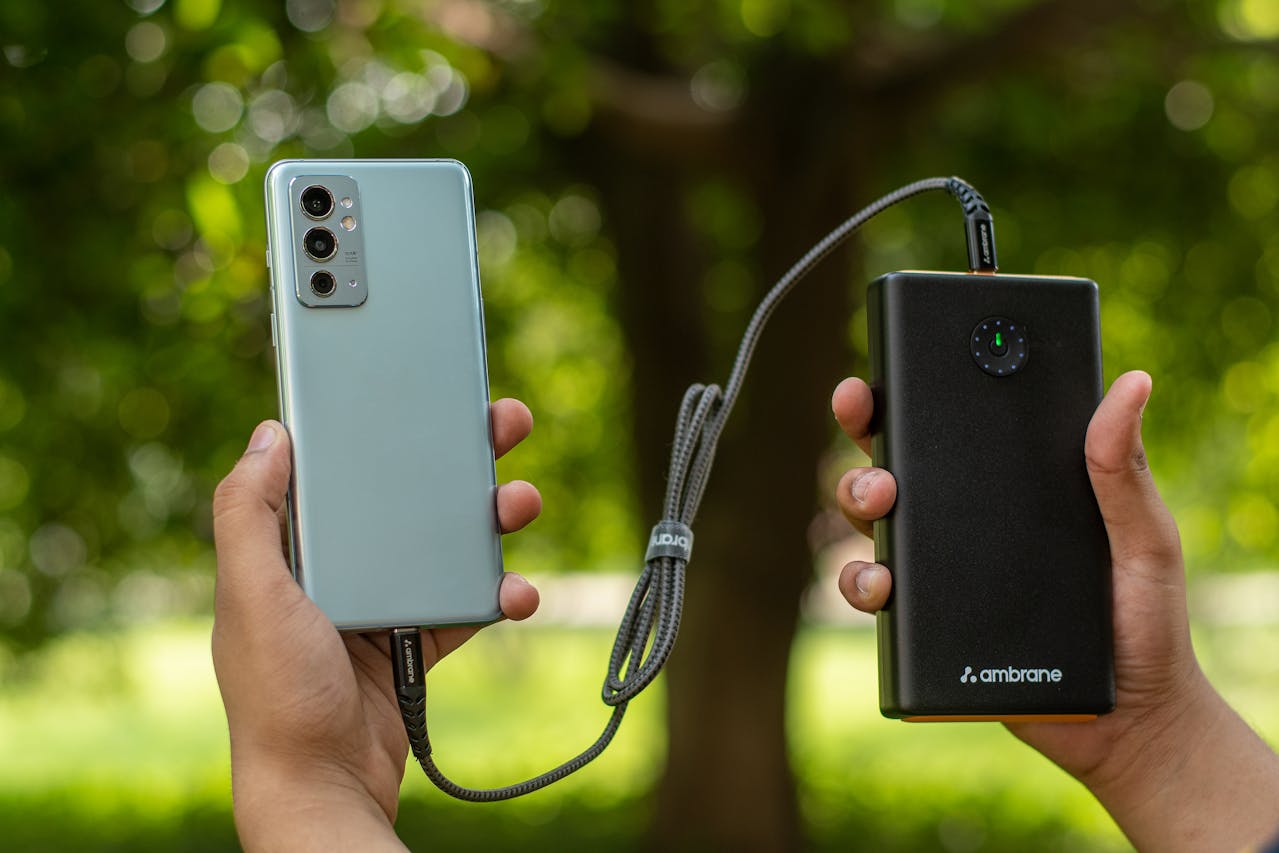
Most people don’t need a power station the size of a microwave.
If your goal is to:
- Charge a phone
- Run with a headlamp
- Maybe recharge a small speaker
Then a solid power bank is your best friend.
Think 20,000–30,000 mAh for a weekend trip.
Think 40,000–50,000 mAh if you’re out for longer or have two devices.
Quick tip:
If your power bank can charge your phone 4–6 times, you’re golden.
Useful Trick:
Bring two small power banks instead of one massive one.
If one dies or fails, you’re still in business. Also, sharing becomes much easier when no one wants to hand over their only battery source.
2. When You Need “Real Power” But Don’t Want a Generator

Let’s say you want:
- A small fridge
- A fan
- To run a CPAP
- Charge cameras, drones, or a laptop
This is where portable power stations come in.
Yes, the Jackery/Bluetti/EcoFlow types you’ve probably seen online.
But here’s the thing…
You don’t need the monster size you saw on YouTube.
You’re not running a festival.
Here’s what actually works:
300 Wh
Perfect for phones, cameras, and lights.
Think “lightweight comfort.”
500 Wh
Sweet spot for most campers.
Fridge? Yes. Fans? Yes.
Laptop + phones? Easy.
1000 Wh
This is “I have a family, a fridge, and I enjoy iced coffee in the woods” territory.
Honesty moment:
Nobody nails their size on the first try.
You either go too small and swear you need more…
Or go too big and spend half the trip saying, “I really didn’t need all this.”
3. Do You Need Solar? Let’s Talk About It Honestly.
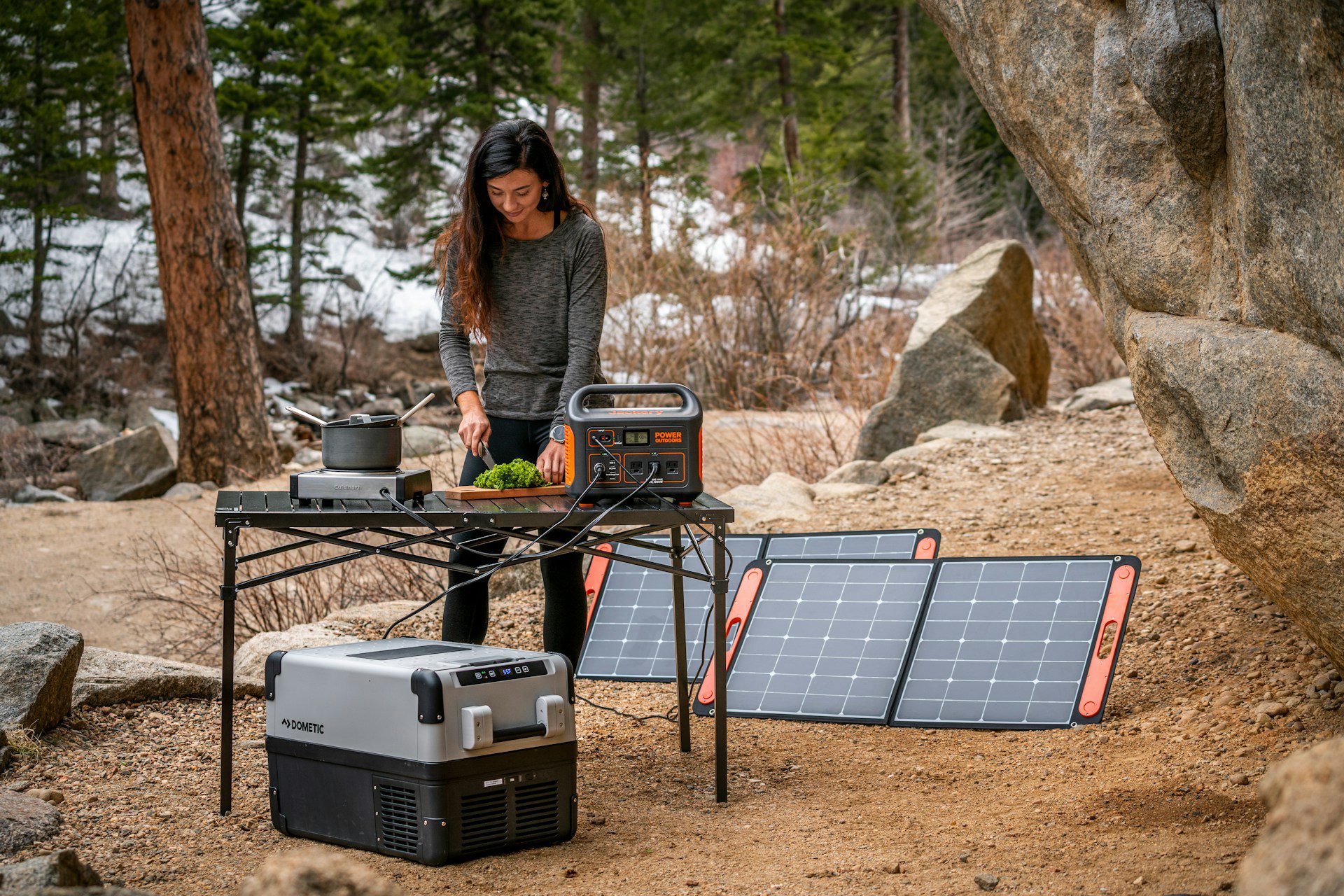
Let’s be real.
When people hear “solar panels,” they picture the giant roof panels from their neighbor’s house.
So, let’s clear this up:
No. We are not talking about those.
Portable camping solar panels fold up like a laptop and weigh less than your cooler.
They’re basically phone chargers with ambition.
Should you get them?
Solar makes sense if:
- You camp for 3+ days
- You’re far from the car
- You’re using a power station
- You’re in sunny weather (looking at you, Arizona)
Solar makes no sense if:
- You’re in the forest under the shade of 200 trees
- You just need to charge phones
- You’re only out for a night or two
The truth:
Solar is magical when it works.
It’s useless when it doesn’t.
Still, it’s a fun backup if you’re out long enough.
4. Your Car Is Basically a Giant Charging Station
If you drive to your campsite, congratulations!
You already own the biggest power source in the area.
Most campers underestimate how useful this is.
You can:
- Charge a power bank
- Recharge your power station
- Top up lights, headlamps, anything USB
- Run things for a couple of minutes without draining your battery
You don’t need complicated setups.
A simple 12V car charger or USB-C fast charger works beautifully.
Our advice:
Top everything up while driving to the campsite.
That head start can save your whole weekend.
5. The “What Should I Bring?” Cheat Sheet
This is where most guides overdo it.
Here’s the no-nonsense version:
For a weekend trip with no electricity:
- 1–2 power banks (20k–30k mAh)
- Rechargeable headlamp
- A lantern (USB rechargeable)
- Optional: small 300–500 Wh power station
For longer trips or gear-heavy setups:
- 500 – 1000 Wh power station
- 60 – 100W solar panel (optional)
- Extra cables (people always forget these)
For minimalists:
- Power bank
- Headlamp
- Done.
Final Thoughts: You Don’t Need to Overthink This
Most people overcomplicate camping power because they imagine the worst-case scenario:
“What if everything dies? What if I can’t charge anything? What if I’m stuck?”
Relax.
You’re outside to enjoy nature, not run a data center.
With the right setup, whether that’s a single power bank or a small power station, you’ll be completely fine.
And don’t worry, we’re saving the budget-friendly gear list (with real product picks that actually make sense) for the next article. That’s where we’ll talk about gear that gives you the best value without turning your backpack into a battery store.


