You wake up, unzip your sleeping bag, and touch the side of your tent. It’s wet. There are tiny water droplets on the ceiling, and your sleeping bag might even feel damp.
But it didn’t rain last night. So where did all that water come from?
In many cases, the answer is condensation. It’s a common camping problem, and it doesn’t necessarily mean your tent is leaking or needs replacing.
The good news is that a few simple changes can help reduce the amount of moisture inside your tent. Here’s why it happens and what you can do about it.
Why Does My Tent Get Wet Inside?
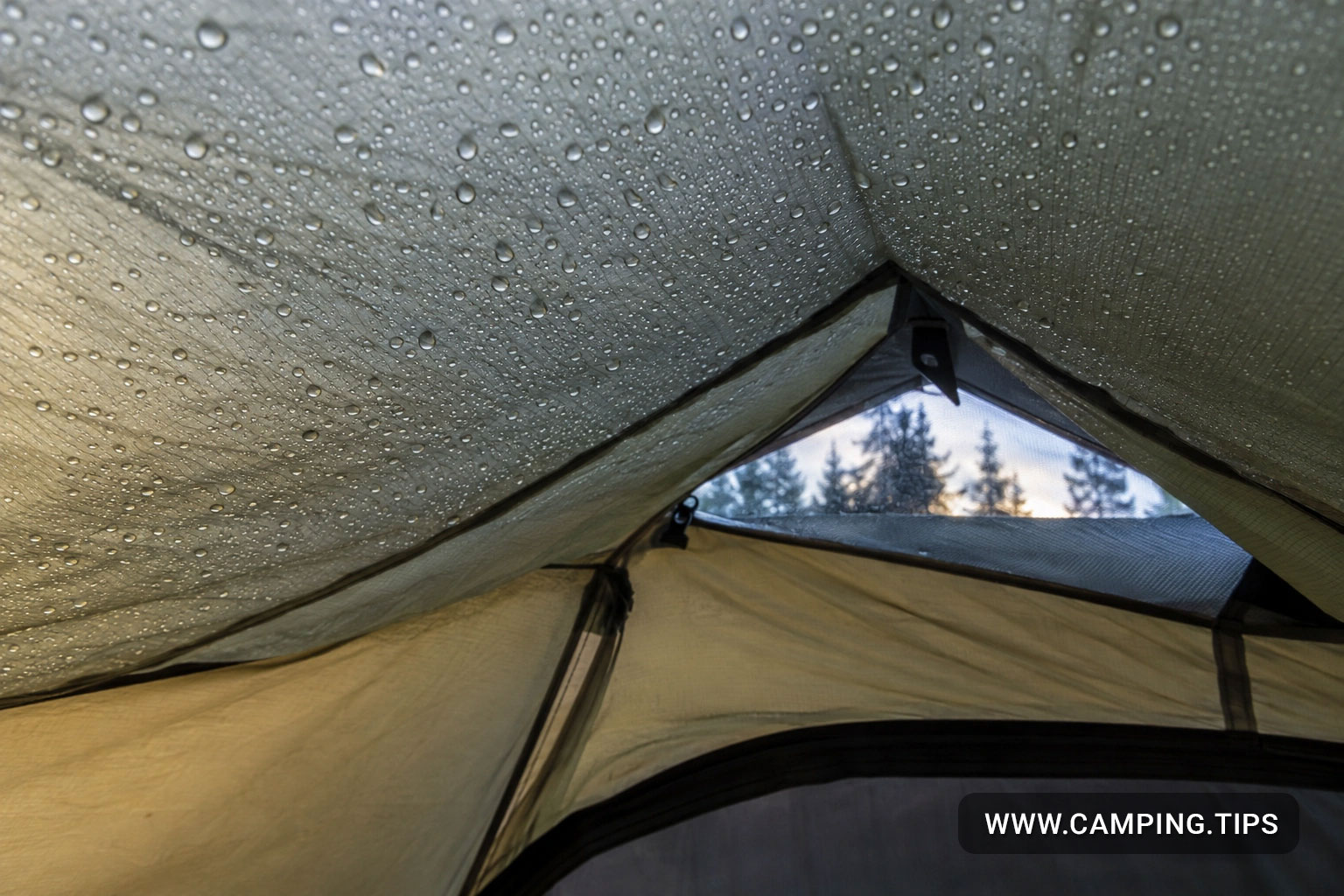
Condensation happens when warm, moist air comes into contact with a colder surface. As the air cools, water vapor turns into tiny droplets of water on the tent fabric.
You contribute to this moisture simply by breathing while you sleep. Wet clothing, damp equipment, humid air, and moisture rising from the ground can add to the problem.
During the night, the temperature of your tent fabric can drop, especially when the sky is clear. By morning, you may find droplets covering the inside of the rainfly or the walls of your tent.
This can happen even when it hasn’t rained at all.
Condensation is particularly common in small tents, tents with limited ventilation, and damp camping conditions. You might not be able to eliminate it completely, but you can often reduce it.
7 Simple Ways to Reduce Tent Condensation
1. Keep Your Tent Vents Open
This is one of the easiest things you can do.
Many tents have small ventilation openings near the top, around the doors, or along the sides. These allow moist air to escape instead of becoming trapped inside.
Keep the vents open overnight whenever the tent’s design and weather conditions allow it. If your tent has adjustable openings, use them to encourage airflow without exposing yourself to driving rain.
It might seem like closing every opening would keep your tent warmer and more comfortable. However, trapping moist air can make condensation worse.
You may still notice some moisture in the morning, but good ventilation can make a difference.
2. Make Sure Your Rainfly Is Properly Set Up
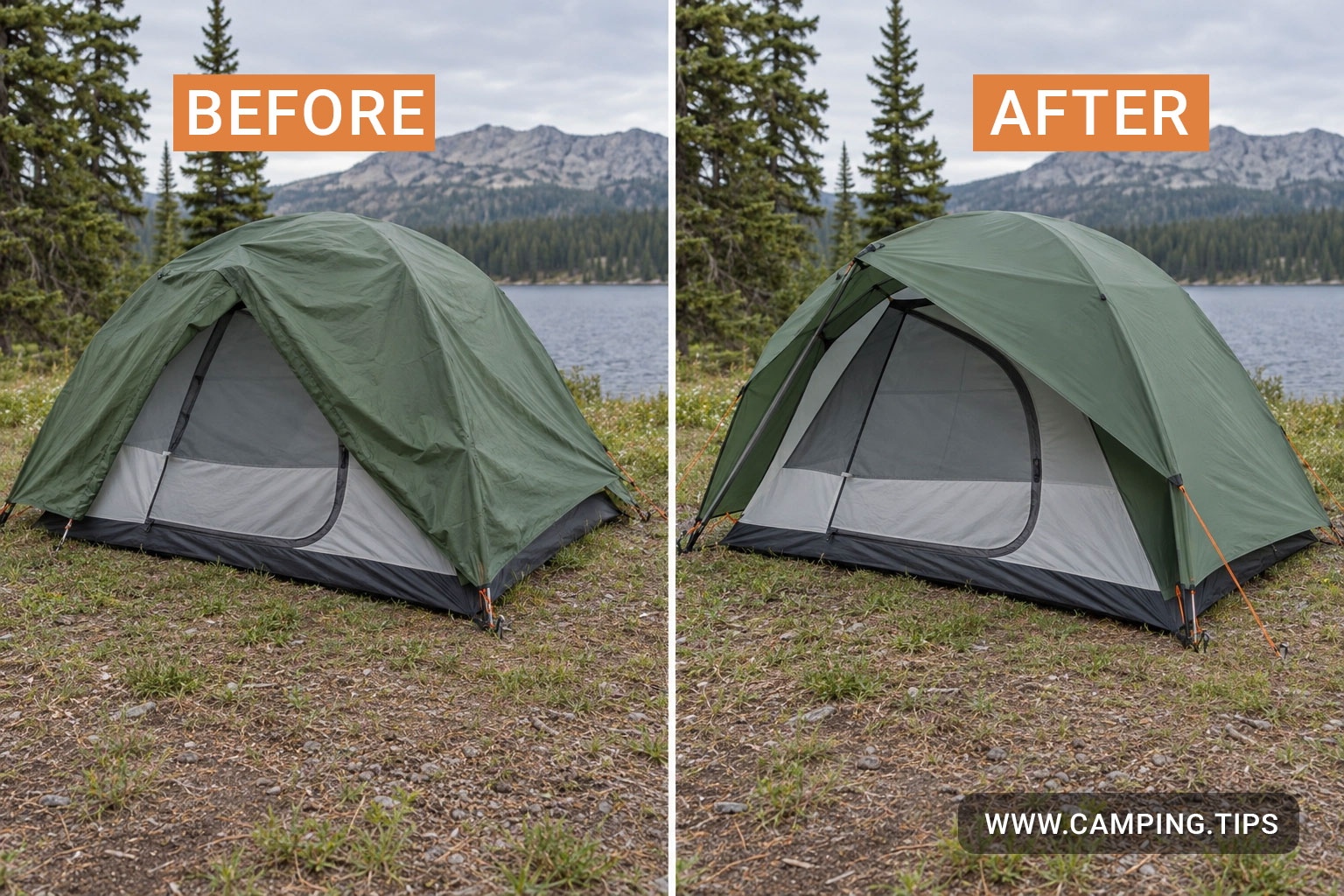
If your tent has a separate rainfly, check that it’s fitted correctly and pulled taut.
A loose rainfly can sag against the inner tent. When moisture collects on the underside, contact between the two layers can transfer water onto the inner fabric or your sleeping gear.
Use the tent’s guy lines and attachment points as intended. Check that the rainfly has enough clearance from the inner tent, especially around the roof and sides.
Not every tent has the same design, so follow the manufacturer’s setup instructions.
3. Keep Wet Clothing and Gear Out of the Sleeping Area
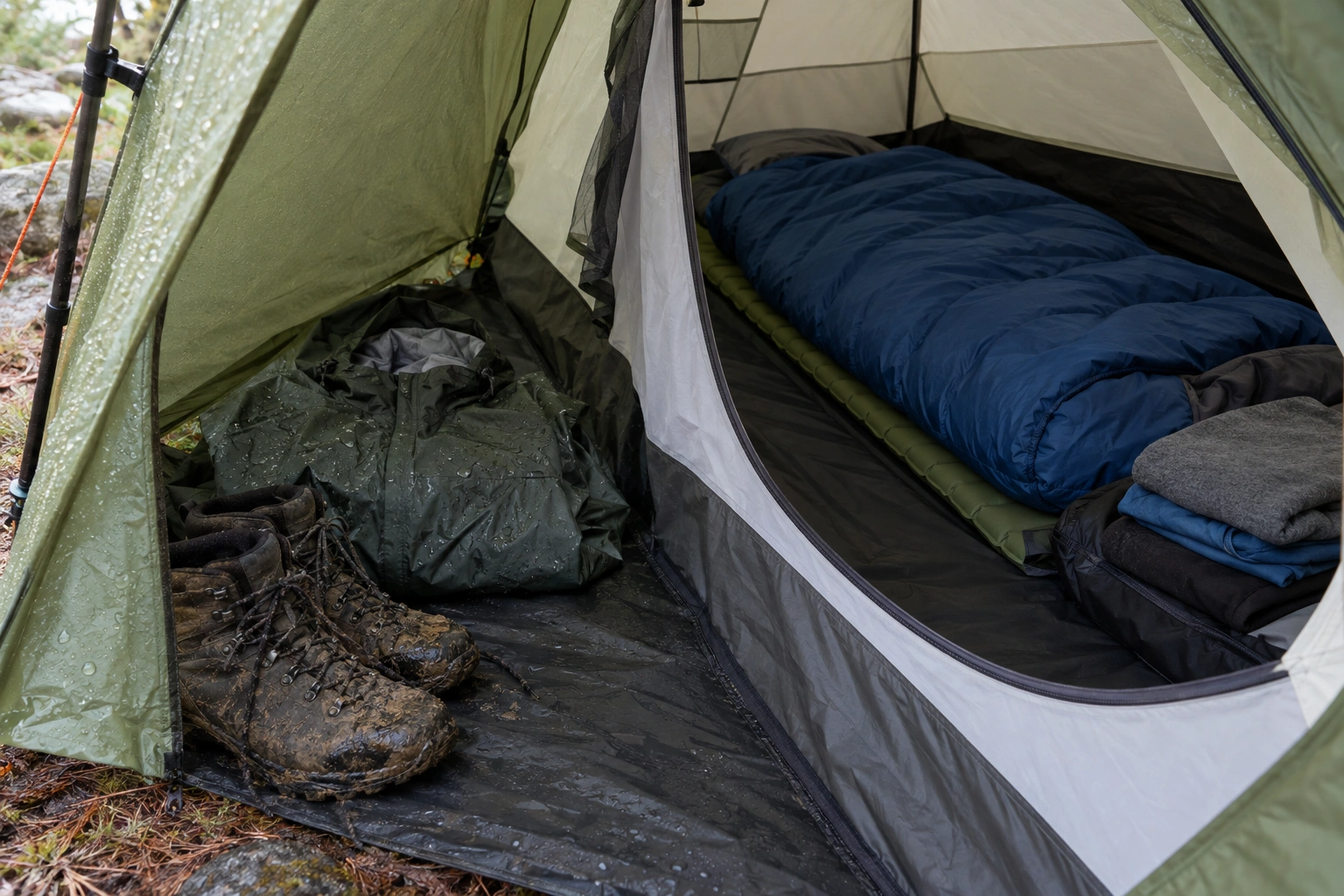
Wet jackets, muddy shoes, damp towels, and other wet equipment all add moisture to the air inside your tent.
If you have a covered porch or vestibule, use it to store wet gear when practical. Keep your sleeping bag and spare clothes away from damp items.
Of course, you should still protect essential equipment from rain and keep anything valuable secure. The idea is simply to avoid bringing unnecessary moisture into the space where you sleep.
If your tent is small, even moving a few wet items away from the sleeping area can help.
4. Choose Your Campsite Carefully
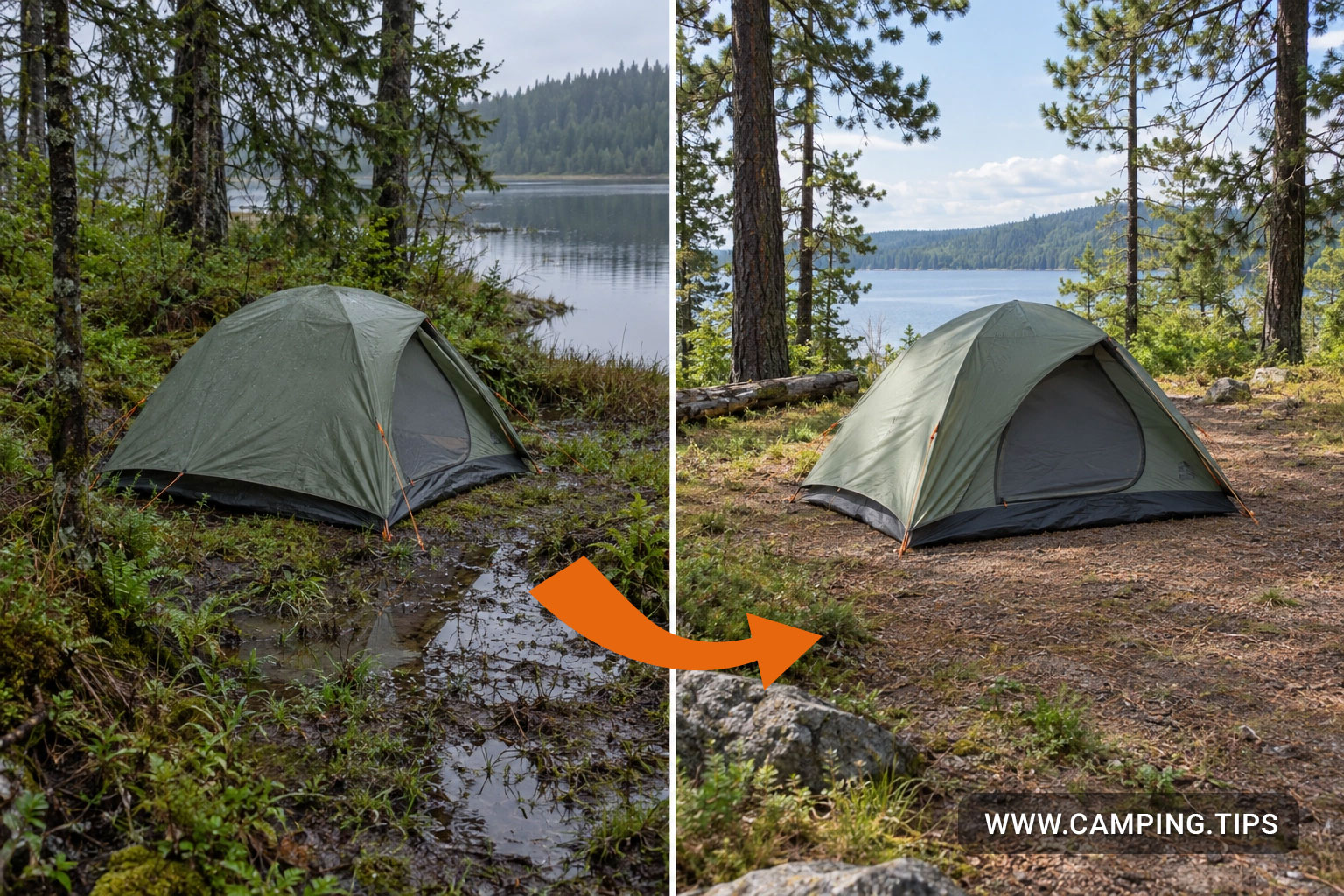
Some camping spots are naturally damper than others.
Low-lying hollows can collect cold, moist air, while campsites beside lakes, rivers, or other wet areas may have higher humidity. Dense vegetation can also limit airflow.
When choosing a pitch, look for reasonably level ground with good drainage and some natural airflow. Avoid depressions where rainwater could collect, and follow local camping rules about where you can pitch your tent.
You don’t need to find the windiest spot in the campground. A little airflow can help, but you still want protection from strong winds and falling branches.
5. Avoid Touching the Tent Walls While You Sleep
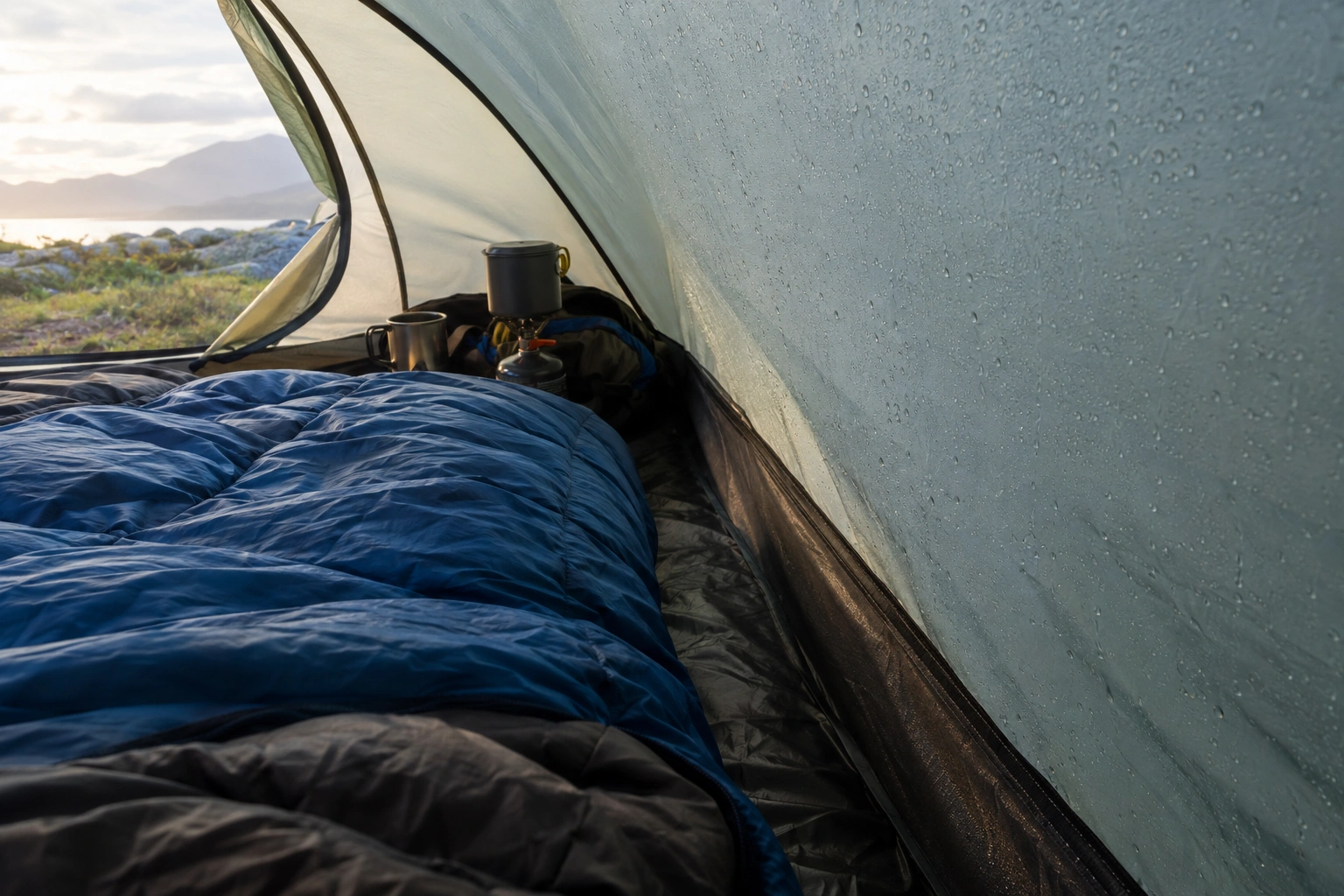
This one is easy to overlook, especially if you’re camping in a small tent.
When condensation forms on the inside of the tent, anything touching the damp fabric can become wet. This includes your sleeping bag, pillow, clothing, and backpack.
Try to leave a little space between your sleeping gear and the tent walls. If you share a small tent with another person, arrange your sleeping bags and equipment so they aren’t pressed against the sides.
This won’t stop condensation from forming, but it can help keep your belongings drier.
6. Wipe Away Water in the Morning
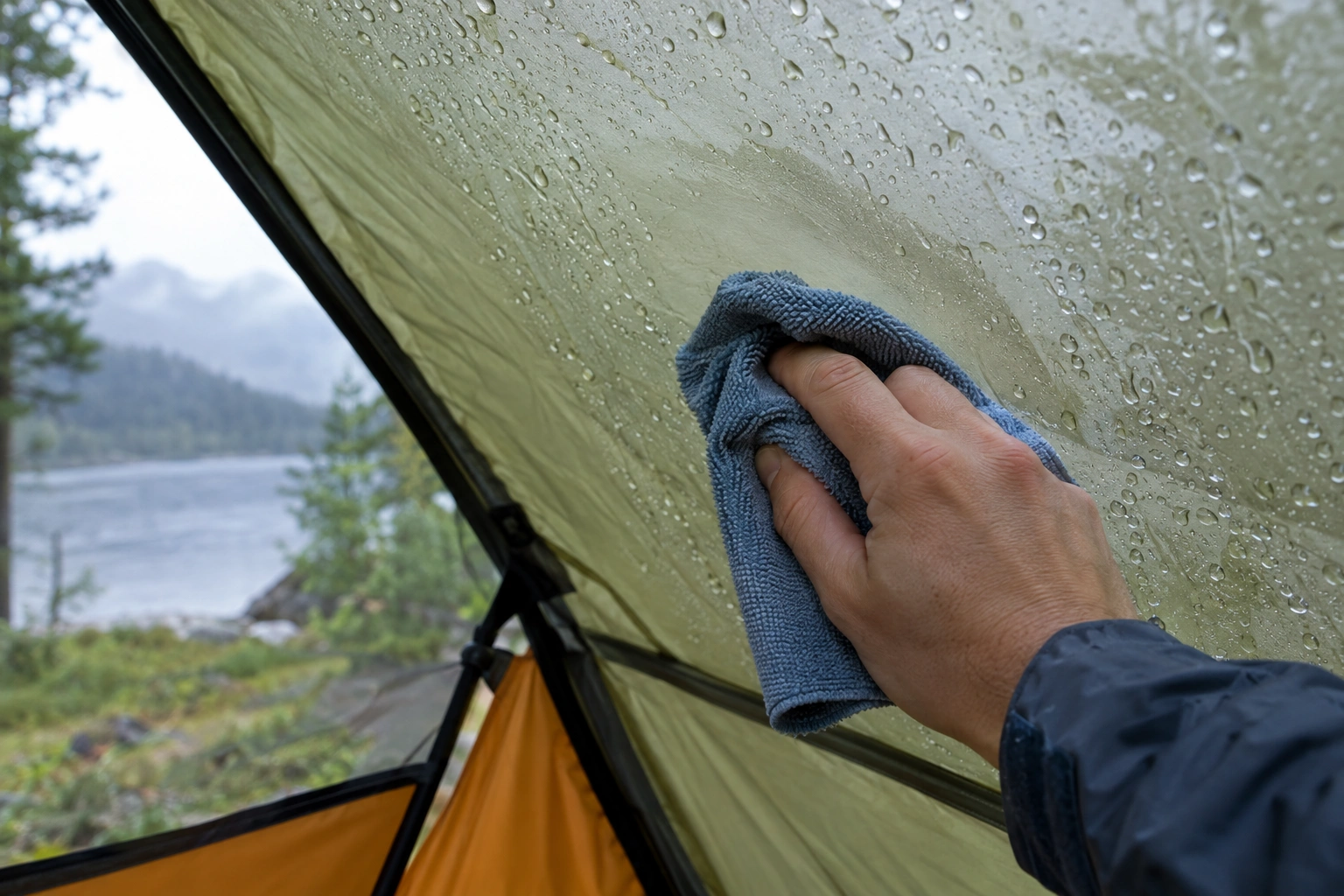
Sometimes, despite your best efforts, you’ll still wake up to a damp tent.
Keep a small, absorbent camping towel or microfiber cloth with your gear. Use it to gently wipe away droplets before they fall onto your sleeping bag or other belongings.
If the inside of your tent is very wet, you may need to wring out the cloth and repeat the process.
Once you’ve packed your sleeping gear away, give the tent time to air out if conditions allow. This is especially helpful if you’re staying at the same campsite for another night.
Wiping down the tent doesn’t prevent condensation, but it can make your morning much more comfortable.
7. Dry Your Tent Before Storing It
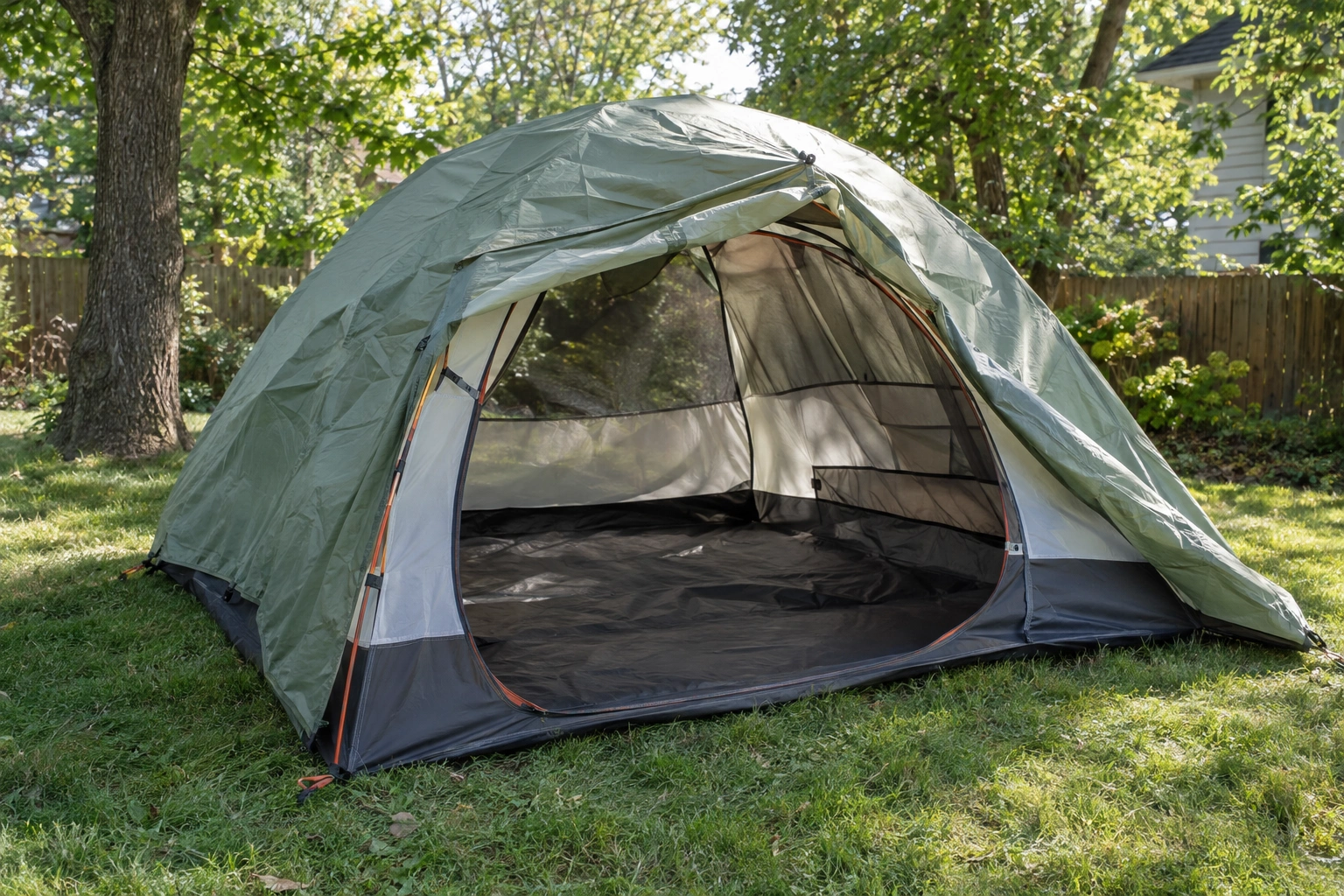
This last step won’t prevent condensation overnight, but it can save you trouble on your next camping trip.
Packing away a damp tent and leaving it in its storage bag for days can encourage mold and mildew. It can also lead to unpleasant smells and damage the fabric over time.
If the weather is dry, set up the tent or hang its components somewhere with good airflow until they’re completely dry. Pay attention to the rainfly, corners, seams, and floor.
If you have to leave the campsite while the tent is still wet, unpack it and dry it as soon as you can.
A little extra time spent drying your equipment can help it last longer.
Is Your Tent Leaking or Is It Condensation?
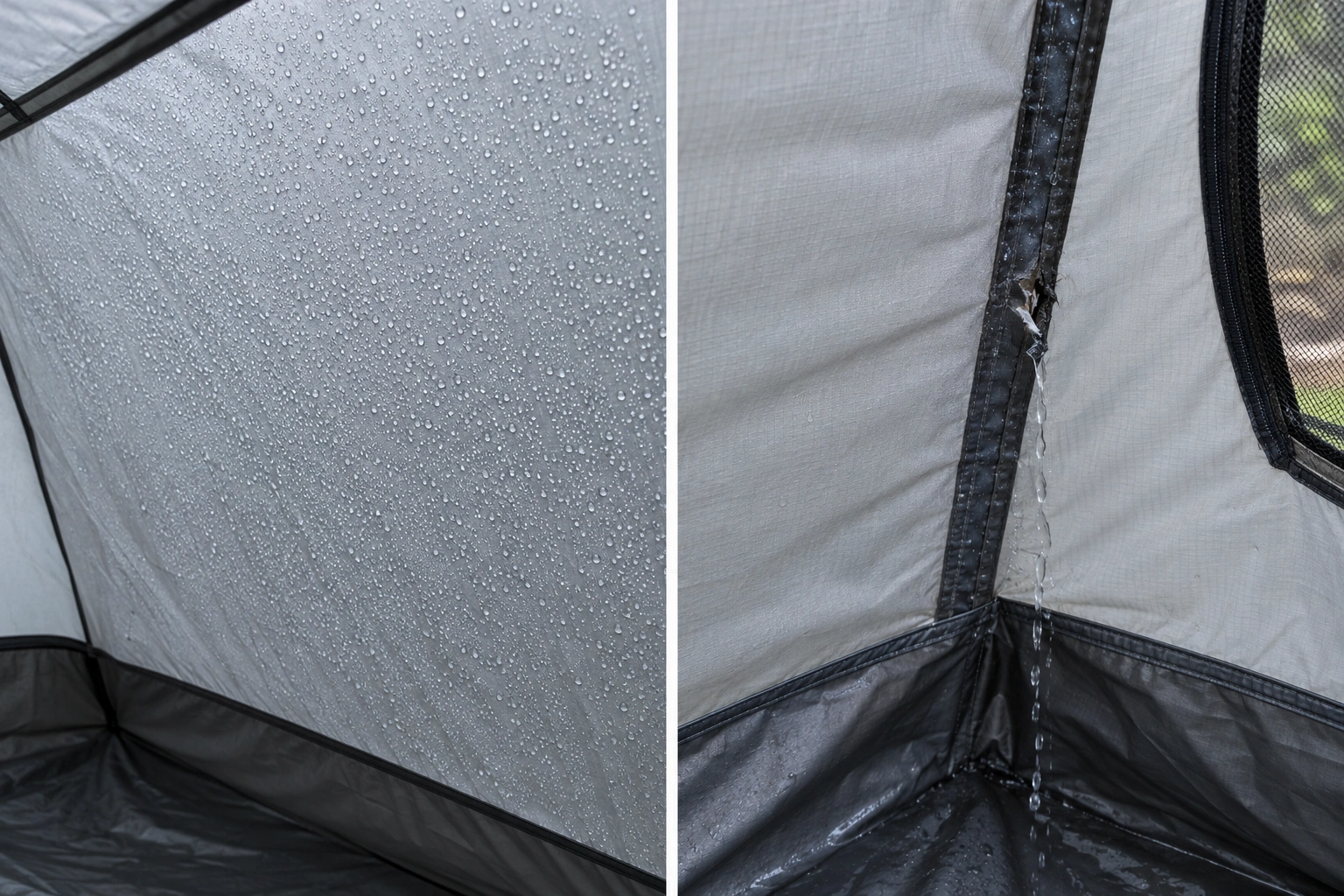
It’s worth checking this before assuming you need a new tent.
Condensation often appears as many small droplets spread across a large area of the inner tent or the underside of the rainfly. It may be particularly noticeable near the roof, and it can occur even after a completely dry night.
A leak is more likely when water repeatedly enters through one particular spot, such as a damaged section, seam, zipper, or vent. Water may also collect underneath the tent if rainwater gets beneath the floor.
These clues aren’t definitive, though. Heavy rain can cause condensation as well as leaks, and water can travel along tent fabric before dripping somewhere else.
If you’re unsure, inspect the tent when it’s dry. Check the seams, fabric, zippers, and rainfly for damage. If necessary, test it with water at home and look for where moisture enters.
Don’t rush to buy a replacement tent just because you find droplets inside one morning. First, work out where the water is coming from.
Frequently Asked Questions
Is it normal for a tent to be wet inside in the morning?
Yes. Condensation is common, especially when the air is humid, temperatures drop overnight, or ventilation is limited. A wet interior doesn’t automatically mean your tent is faulty.
Will opening the vents stop condensation completely?
Not necessarily. Good ventilation helps moisture escape, but weather, humidity, tent design, and the number of people sleeping inside all affect how much condensation forms.
Should I close my tent completely to stay warm?
Not if doing so blocks the ventilation your tent needs. Keep the recommended vents open where possible and use an appropriate sleeping bag and clothing to stay warm. Avoid sacrificing essential ventilation just to retain heat.
Can I use a heater to dry out my tent?
Don’t use a fuel-burning heater or stove inside an enclosed tent to dry it. These can produce deadly carbon monoxide and create a fire risk. Airflow and a suitable towel are safer ways to manage moisture.
Should I pack my tent away while it’s wet?
Sometimes you have no choice, particularly when it’s raining or you need to leave. If you must pack it damp, unpack it and dry it as soon as practical. Don’t leave a wet tent sealed in its storage bag for an extended period.
A Little Condensation Doesn’t Mean a Bad Tent
Waking up to a wet tent can be frustrating, but it’s often a normal part of camping rather than a sign that something is broken.
Start by improving ventilation, setting up your rainfly properly, and keeping wet equipment away from your sleeping area. If moisture still appears, wipe it down in the morning and dry your tent before storing it.
You may not be able to prevent every drop, but a few simple habits can help you sleep more comfortably and keep your camping gear in better condition.
You might also want to read our article on Waterproofing Hacks Every Camper Should Know